English


Views: 133 Author: Site Editor Publish Time: 2025-12-16 Origin: Site


A gasoline engine is a core power source for generators, water pumps, agricultural machinery, and many kinds of small to mid-size industrial equipment. For buyers, distributors, and OEM partners, understanding how gasoline engines are classified, where they perform best, and which parameters truly matter helps reduce selection errors and long-term operating risks. This article explains gasoline engines from a practical sourcing and application perspective, with a focus on high-power air-cooled solutions.
A gasoline engine is a spark-ignition internal combustion engine that converts gasoline into mechanical power through controlled combustion inside the cylinder. Air and fuel are mixed, compressed by the piston, ignited by a spark plug, and the resulting explosion drives the piston downward. This linear motion is converted into rotational energy through the crankshaft, which powers external equipment such as generators, pumps, or industrial tools. Gasoline engines are widely used because they are easy to start, relatively lightweight, flexible in installation, and well supported globally in terms of parts and servicing.
Although designs vary by power level and configuration, most gasoline engines follow the same operating cycle.
Air enters the intake system and mixes with gasoline through a carburetor or an electronic fuel injection (EFI) system. The piston compresses this mixture inside the cylinder. At the correct timing, the spark plug ignites the mixture, initiating combustion.
Combustion forces the piston downward, generating power. The crankshaft converts this motion into continuous rotation, which is transmitted to the driven equipment. Exhaust gases are then expelled, preparing the engine for the next cycle. This repeated process produces stable mechanical output suitable for continuous or intermittent operation.
Selecting the right gasoline engine starts with understanding the main technical categories.
2-stroke gasoline engines complete a power cycle in two piston movements. They are compact and lightweight but generally noisier, less fuel efficient, and higher in emissions. They are more common in small handheld tools.
4-stroke gasoline engines complete intake, compression, power, and exhaust in four piston movements. They offer better fuel economy, smoother operation, and longer service life, making them the preferred choice for generators, water pumps, and industrial equipment that operate for extended periods.
Air-cooled gasoline engines dominate the small and mid-power market because of their simple structure, lower system cost, and easier maintenance. Advances in cooling design now allow air-cooled engines to support higher displacement and output levels while maintaining thermal stability.
Water-cooled engines are typically used in specialized or very high-duty applications where temperature control must remain extremely stable under long continuous load.
Carburetor systems are simple, cost-effective, and easy to service, making them popular in many export markets.
EFI gasoline engines offer more precise fuel control, improved fuel efficiency, better cold starting, and lower emissions. For buyers targeting regulated markets or high-performance applications, EFI is increasingly preferred.
High-output gasoline engines are widely used where strong, reliable power is required without the complexity of diesel systems.
In generator systems, the gasoline engine drives the alternator to provide electricity for industrial backup power, job sites, outdoor operations, and emergency use. Key selection factors include stable RPM, continuous rated power, fuel efficiency, and emission compliance.
High-power gasoline engines are also used in construction machinery, industrial cleaning equipment, mobile compressors, and specialized mechanical systems where portability and strong output are required.
For applications that require strong output, modern EFI technology, and compliance with international standards, a high-displacement air-cooled gasoline engine is often the optimal solution.
A representative example is this air-cooled 999CC 40HP EFI V-twin gasoline engine, designed for demanding generator and industrial applications:
Air-cooled 999CC 40HP EFI V-Twin Gasoline Engine
https://www.cqfullas.com/Air-cooled-999CC-40HP-EFI-V-Twin-Cylinder-Horizontal-Gasoline-Engine-with-CE-EPA-EURO-V-pd561097278.html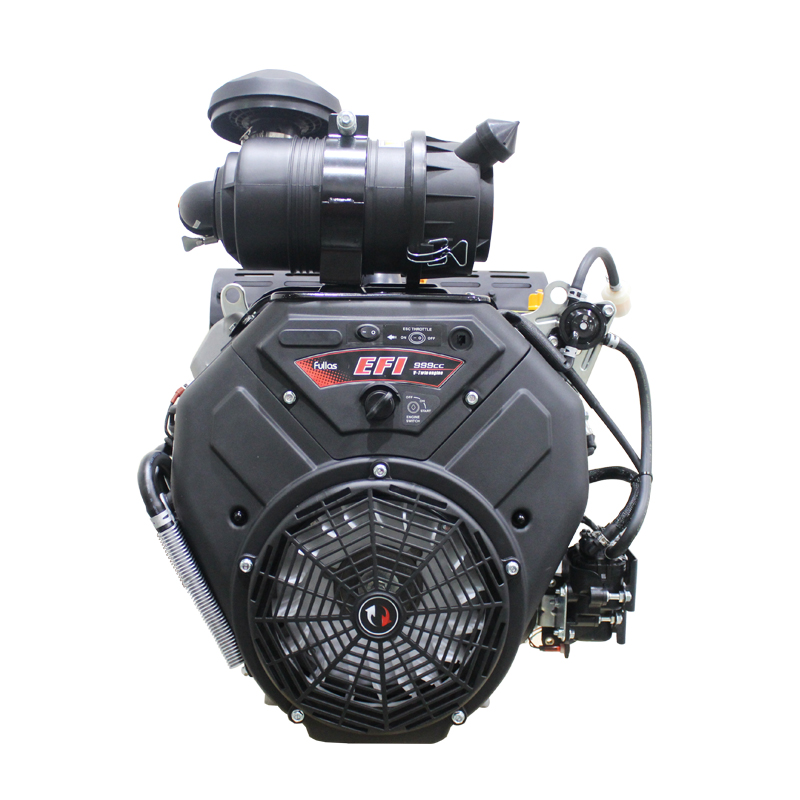 This type of engine combines high displacement, EFI fuel control, and a V-twin configuration to deliver stable power, smoother operation, and improved fuel efficiency, while meeting CE, EPA, and EURO V requirements.
Incorrect selection is one of the most common causes of performance issues and after-sales disputes. These points should guide the decision process.
Maximum power figures can be misleading for real-world use. For generators and equipment that operate for long periods, rated or continuous power output is far more important. An engine that operates comfortably within its rated range will typically offer better durability and lower maintenance costs.
Many systems require stable output at a specific RPM. Generators, in particular, depend on consistent rotational speed for reliable electrical output. Torque reserve is equally important for equipment that experiences load fluctuations, such as industrial tools or pumps.
Before placing an order, always verify shaft type, shaft diameter and length, mounting hole pattern, starter configuration, and accessory layout. Mechanical mismatch is a frequent cause of installation problems, even when engine quality is high.
For distributors and equipment manufacturers, supplier capability matters as much as engine specifications. Confirm quality control procedures, spare parts availability, warranty handling, lead time stability, and OEM/ODM services such as branding, manuals, and packaging.
Proper maintenance significantly extends engine service life. Regular oil changes, clean air filters, correct spark plug condition, and proper fuel management are essential, especially for high-power gasoline engines operating under heavy load. For seasonal storage, fuel stabilization or draining helps prevent fuel system issues.
A gasoline engine remains a highly efficient and flexible power solution for generators and industrial equipment. By understanding engine types, cooling methods, fuel systems, and real application demands, buyers can select engines that deliver stable performance and long service life. High-power air-cooled EFI gasoline engines, such as modern V-twin designs, provide an effective balance of output, efficiency, and compliance for demanding global markets.
If you are building a product line or sourcing engines for generator or industrial use, defining the application scenario and load requirements first will make engine selection faster, safer, and more cost-effective.

